Bale Mountains National Park, located in southeastern Ethiopia, is one of Africa’s most biologically diverse highlands. Established to protect Ethiopia’s unique wildlife and stunning landscapes, the park spans 2,200 square kilometers and includes Afro-alpine peaks, lush forests, and expansive grasslands.
The park is part of the Ethiopian Highlands, known for its endemic species, scenic trekking routes, and rare wildlife. Bale Mountains is often called the “land of misty mountains and wildlife”, attracting adventure seekers, hikers, birdwatchers, and photographers.
Landscape & Scenery 🏞️
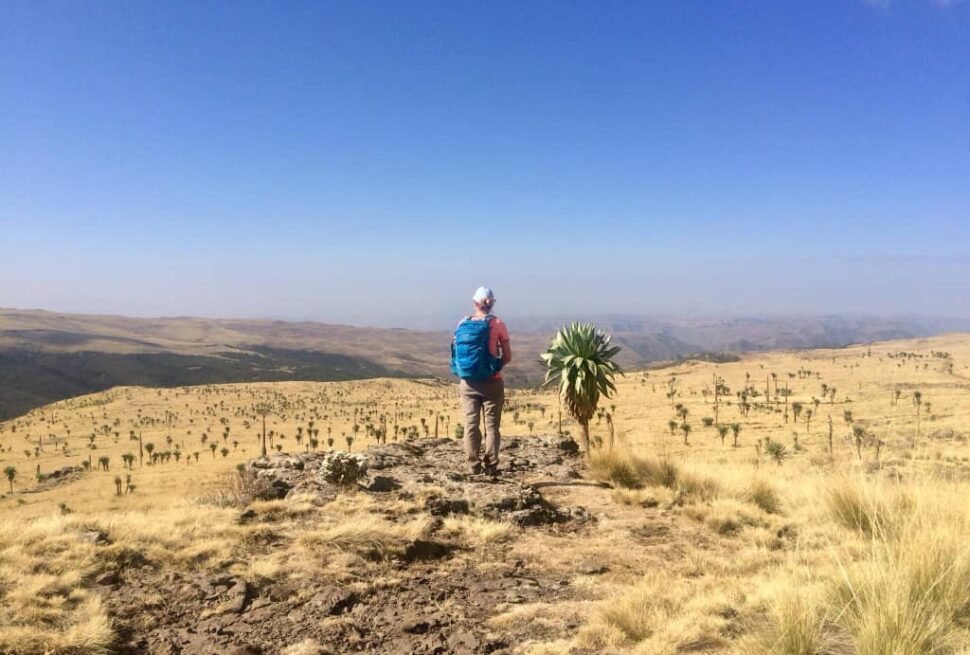
- Sanetti Plateau (4,000 m): Ethiopia’s highest Afro-alpine plateau with giant lobelia and red-hot poker plants
- Rolling grasslands, deep gorges, and dramatic cliffs
- Rivers, waterfalls, and glacial valleys providing scenic trekking routes
- Harenna Forest: One of Ethiopia’s last remaining cloud forests, rich in flora and fauna
The variety of landscapes makes Bale Mountains a premium trekking and wildlife destination in Ethiopia.
Trekking & Adventure 🚶♂️
Bale Mountains offers multiple trekking routes, from moderate hikes to challenging multi-day expeditions. Trekking here combines wildlife watching, birding, and stunning alpine scenery.
Key Tips for Trekking
- Trekking permits are required and available at the park office
- Trek with licensed guides for safety and wildlife spotting
- Proper trekking boots, clothing, and layers are essential due to altitude
- Trek durations range from 1 to 7 days, depending on chosen trails and fitness
Official Trekking Routes 🗺️
Sanetti Plateau Trek
- Duration: 2–4 days
- Highlights:
- Afro-alpine landscapes
- Giant lobelia and unique plant species
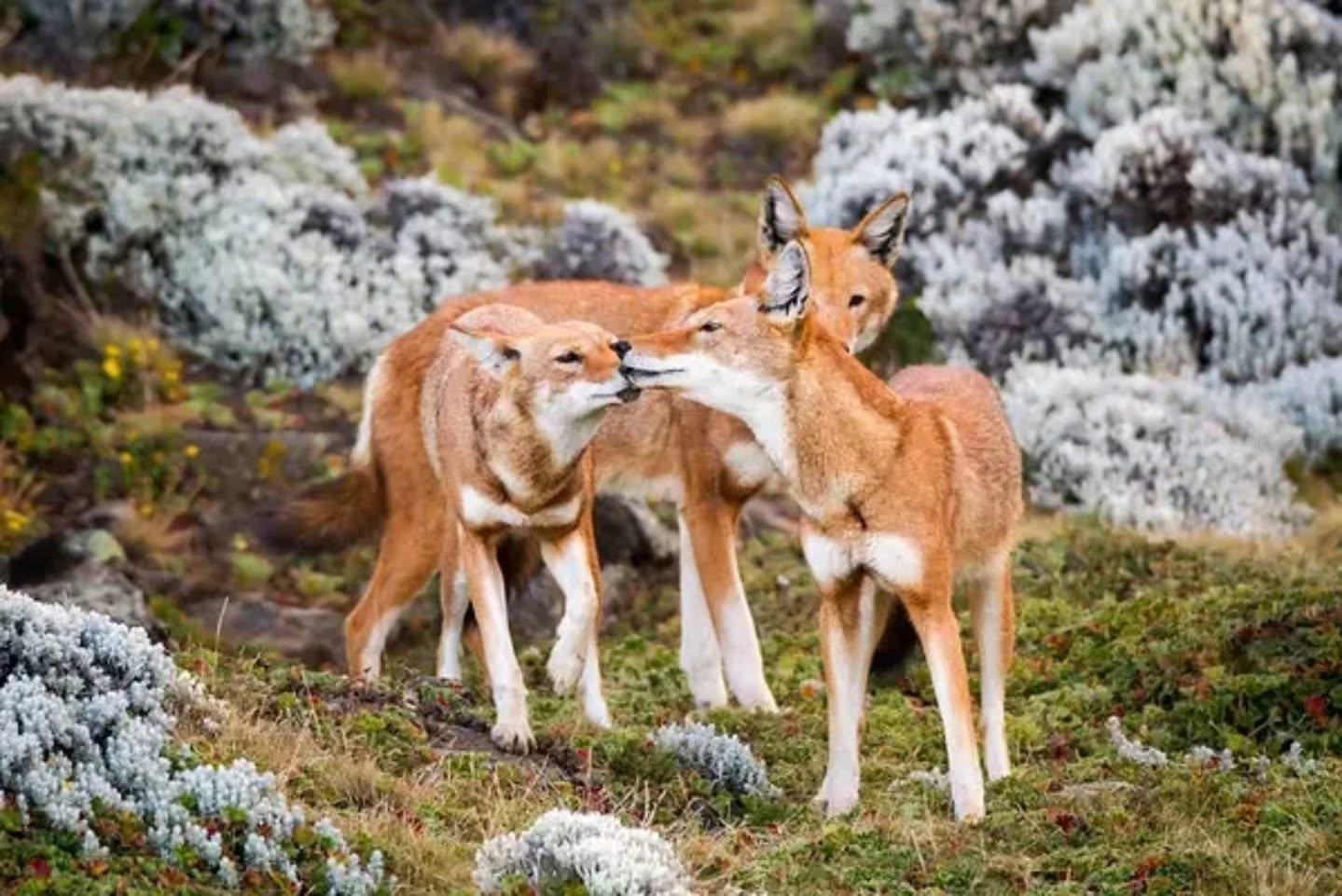
- Sightings of the endemic Ethiopian wolf
Harenna Forest Trail
- Duration: 3–5 days
- Explore dense cloud forests with rare flora and wildlife
- Possible sightings: Bale monkey, leopards, and hundreds of endemic birds
Dinsho Trek
- Duration: 1–2 days
- Perfect for shorter hikes and wildlife observation
- Wildlife highlights: Klipspringer, colobus monkeys, and hippos in nearby rivers
Wildlife Highlights 🦌
Bale Mountains is home to some of Ethiopia’s rarest and most iconic wildlife.
Ethiopian Wolf
- Endemic to Ethiopia
- Only surviving population in the highlands of Bale and Simien Mountains
- Best viewed at dawn or dusk on the Sanetti Plateau
Mountain Nyala
- Endangered antelope species
- Native to the Bale Mountains region
- Often spotted on open grasslands
Other Wildlife
- Klipspringer
- Bushpig
- Colobus and Cercopithecus monkeys
- Hippos in rivers
- Leopards (rare, elusive)
Bird Watching 🦅
Bale Mountains is a birdwatcher’s paradise, with over 300 recorded species, including:
- Blue-winged goose (endemic)
- Ethiopian buzzard
- Rouget’s rail
- Abyssinian catbird
- Wattled ibis
🕊️ Best time for birding: Early mornings and during the dry season for maximum visibility.
Flora & Vegetation 🌿
- Afro-alpine plateau: Giant lobelia, red-hot poker, endemic shrubs
- Montane forests: Harenna Forest with diverse trees, ferns, and orchids
- Altitude plays a major role in plant distribution, creating unique ecosystems for each elevation
Best Time to Visit 📅
- Dry Season: October – March
- Best for trekking, wildlife, and birdwatching
- Clear trails and scenic mountain views
- Rainy Season: June – August
- Lush green landscapes and waterfalls
- Trails may be slippery and challenging
How to Reach Bale Mountains 🚗✈️
- Fly to Addis Ababa and drive to Dinsho, the main gateway town (approx. 12 hours)
- Road trips pass through stunning highland scenery and small towns
- Local guides can organize 4×4 transport to remote trekking starting points
Accommodation Options 🏕️
Inside the Park
- Dinsho Lodge – mid-range accommodation with comfortable amenities
- Camping options available at Sanetti Plateau and Harenna Forest
Nearby Towns
- Lodges and guesthouses in Dinsho and Robe
- Bookings recommended during peak trekking months
Why Visit Bale Mountains with Ethiopian High Land Tours 🌄
- Expert local guides with knowledge of wildlife and flora
- All trekking permits and logistics arranged
- Multi-day and single-day options available
- Wildlife spotting and birdwatching tours included
- Safe, ethical, and fully organized itineraries